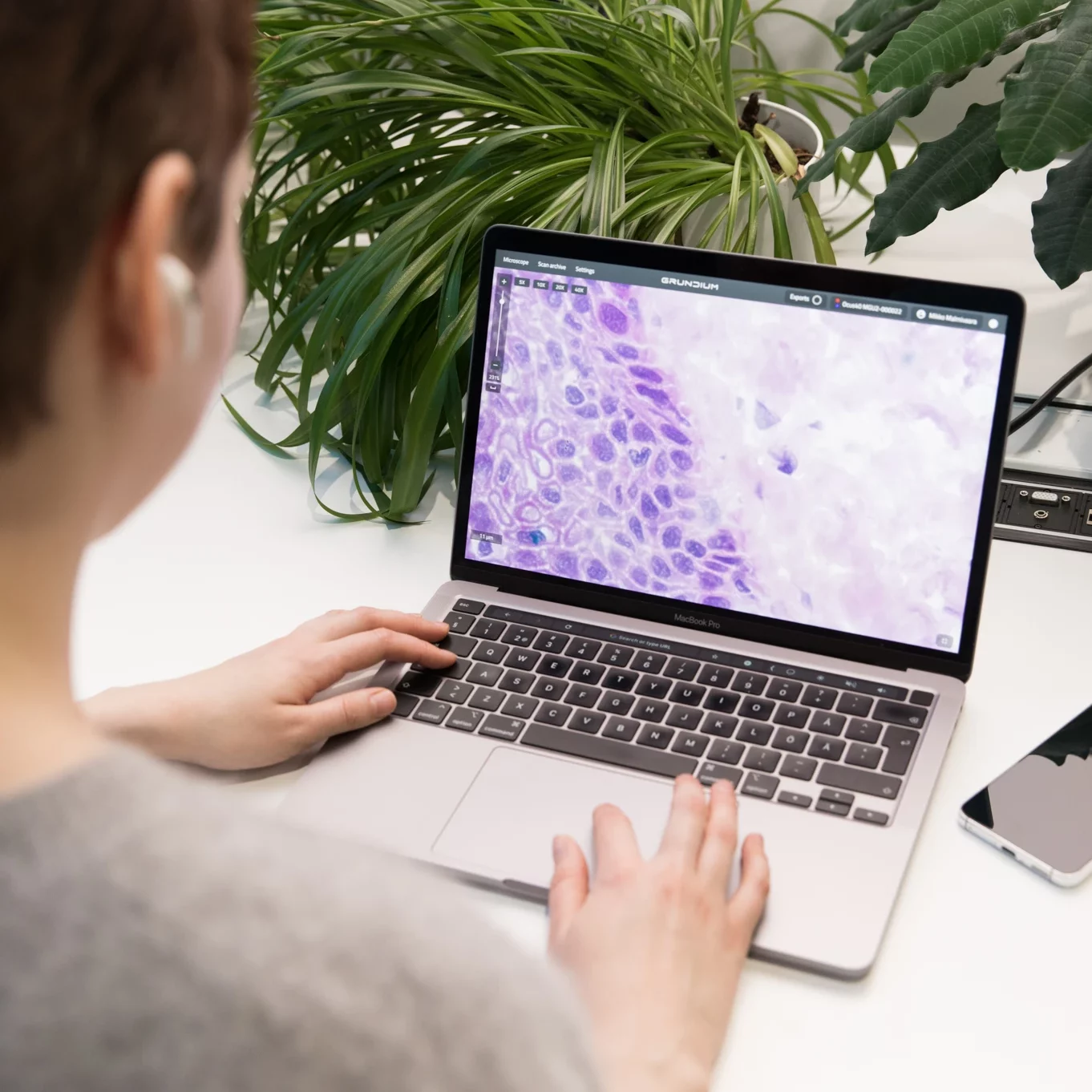
The Ocus®40 microscope scanner is a versatile tool designed to enhance digital pathology workflows with high-resolution imaging. It supports a wide range of applications, including:
With its advanced features, the Ocus®40 ensures accurate and efficient evaluation of tissue samples, making it an essential asset for modern pathology labs.
Designed for both accessibility and high performance, the Ocus®40 combines quality, affordability, and user-friendliness. This level of magnification unlocks new possibilities in digital pathology, allowing for in-depth analysis and interpretation of samples with unparalleled clarity.

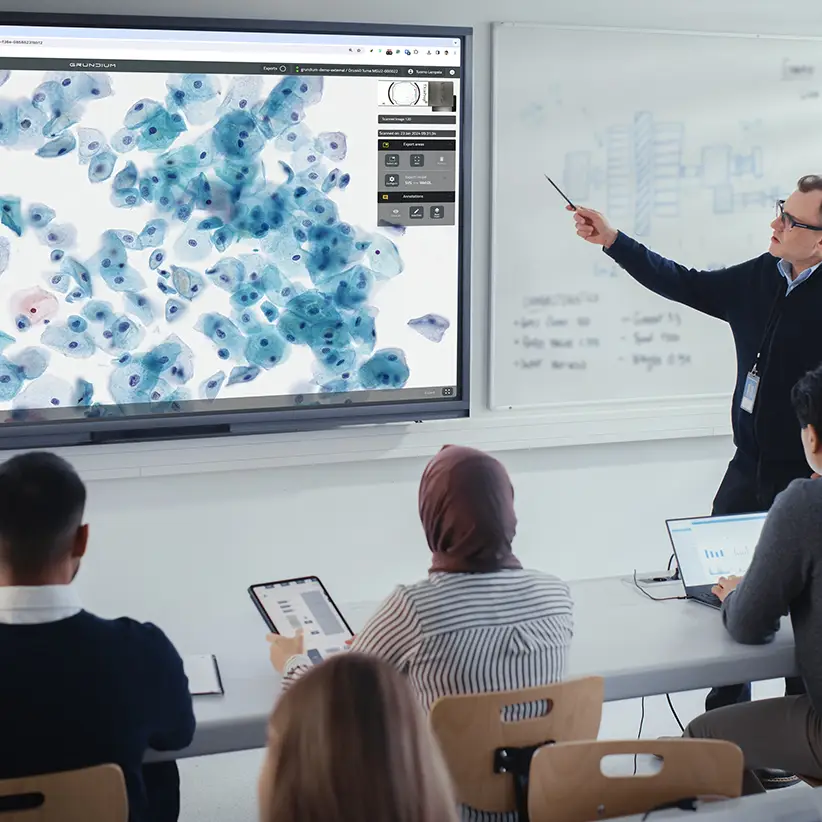
RESEARCH AND EDUCATION ENVIRONMENTS
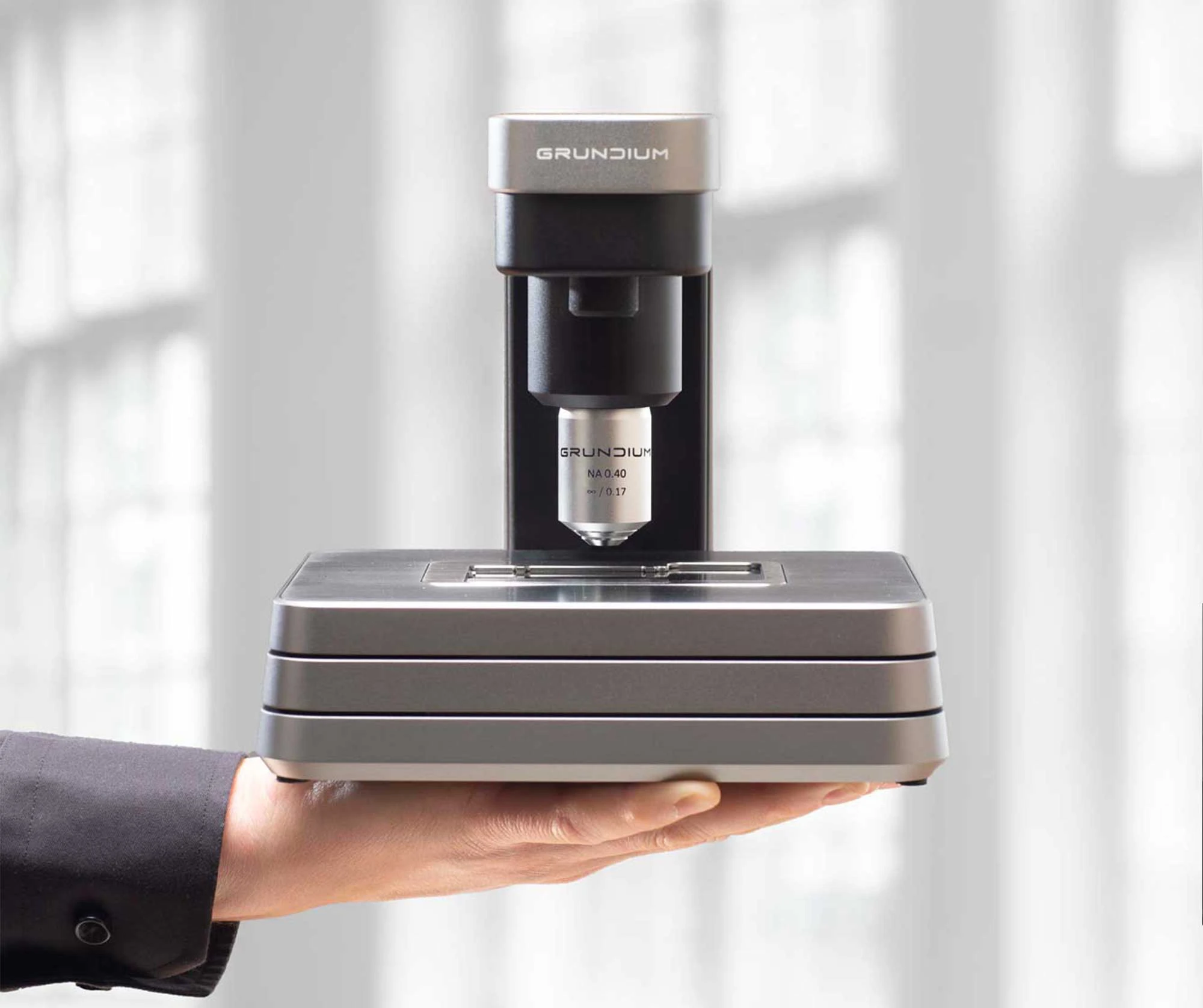
Magnification: 40x
Numerical Aperture: 0.75
Resolution: 0.25 µm / pixel
Depth of field: 1 µm
Slide format: 75 x 25 mm (3 × 1 in)
Scan speed: ~200 sec / 15 × 15 mm
Image formats: .SVS, .TIFF, .SZI
Focusing: Fully automatic
Image sensor: 12 MPix
Dimensions: 7 × 7 × 7.5 inches (18 × 18 x 19 cm)
Weight: 7.7 Lbs / 3.5 Kg
Internal Storage: 500 Gigabytes
Power consumption / Standby: 0,03 A, 0,007 kVA, 0,007 kW
Power consumption: / Operation: 0,09 A, 0,021 kVA, 0,021 kW

Out of all the scanners I’ve used — and I’ve used a lot — it’s the easiest one. We've scanned more than 30 000 slides without any technical issues.

With Grundium Ocus-enabled telepathology, we can provide better service to our customers; the hospitals. For the hospitals the process doesn’t change, but they benefit from Fimlab working faster and more accurately with digital pathology.

Not only has Grundium created something unique in the market with the beautifully designed small-footprint scanner, but they also have a super technical team that can work really close together to make the whole solution seamless and is willing to invest themselves in making something new. It’s super unique in the world to have everything from the region of interest, focus layers, depth of field and the whole experience totally integrated.

The Ocus scanner is small and produces very sharp images fast. It is a vital instrument in field use in organ procurement. Its unparalleled portability helps save lives.

We have excellent images with the Ocus and I couldn’t be happier to have this little helper on my desk here. I use it mainly as a microscope, to be honest, but of course, scan my slides as well. It has really helped me so much.

The Philips IntelliSite Digital Pathology Solution has the capabilities to upload, view and annotate the images produced from the Grundium scanner. Zooming and panning is really fast, even when the images are physically stored on a server in the Netherlands and I’m viewing the images from a workstation in Sweden.
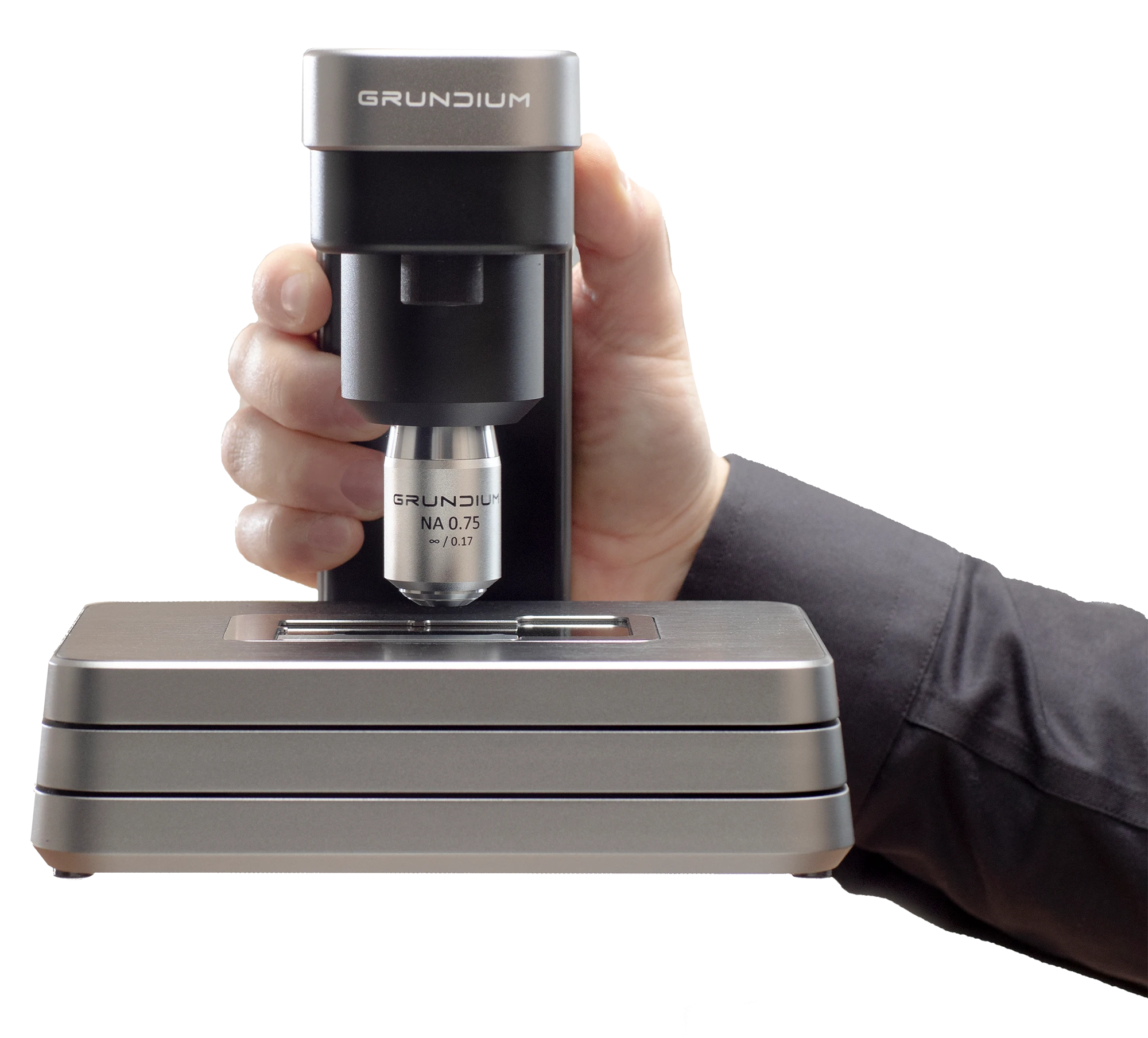
The Ocus®40 is a digital pathology slide scanner designed to digitize standard glass microscope slides at 40x magnification. It delivers high-resolution whole slide images that support diagnostics, research, and education, enabling precise digital visualization for applications that require exceptional detail.
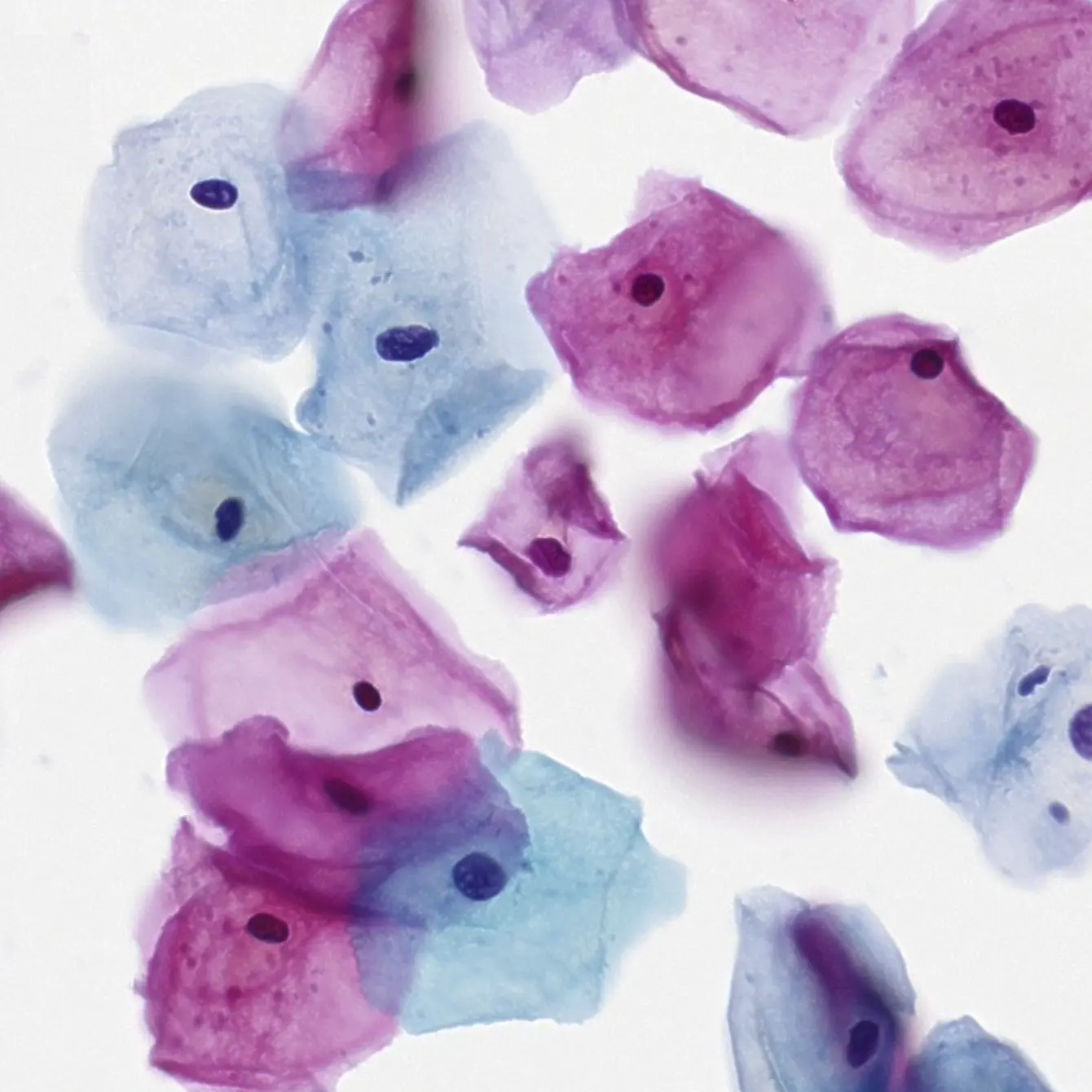
Ocus®40 is used to digitize glass slides for a wide range of digital pathology applications, including routine histology (H&E), immunohistochemistry (IHC), tumor grading and staging workflows, and biopsy review. Its higher magnification is also well suited for cytology applications such as fine needle aspiration (FNA) and other specimens where additional cellular detail is helpful. It is also used in research and education settings where high-quality digital slides support analysis, collaboration, and training.
The primary difference is optical performance and the level of detail captured. Ocus®40 scans at 40× (0.25 µm/pixel) with a higher numerical aperture (0.75) and ~1 µm depth of field, which supports closer evaluation of fine cellular detail. Ocus®20 scans at 20× (0.50 µm/pixel) with NA 0.40 and ~5 µm depth of field, which is commonly sufficient for routine histology review and provides a broader in-focus plane.
In workflow terms, Ocus®20 is typically used when speed and data efficiency are priorities (about ~1 minute for a 15 × 15 mm area), while Ocus®40 is selected when maximum detail is needed (about ~3 minutes for the same area). Both are single-slide scanners for 1” × 3” slides, support automatic tissue detection, continuous autofocus, live view, and offer export in DICOM, SVS, TIFF, and SZI.
Yes. Ocus®40 is suitable for routine pathology scanning, particularly in workflows that benefit from higher magnification and detailed image quality. It can be used as a primary scanner for routine casework or as a complementary scanner alongside other systems, depending on the lab’s case mix, throughput targets, and standard operating practices.
Ocus®40 enables remote consultations and second opinions by digitizing glass slides into high-quality whole slide images that can be shared for review beyond the originating lab. This supports collaboration between sites, access to subspecialty expertise, and multidisciplinary case discussions without the delays and risks of shipping physical slides.
Ocus®40 supports digital pathology workflows by providing streamlined slide scanning with consistent, high-resolution output in a compact, easy-to-deploy system. It integrates into routine laboratory work by enabling efficient digitization of cases and generating digital slides suitable for on-screen review, archiving, and downstream analysis.