

Up to 12 independent scanning heads, 600-slide capacity and load-and-go automation bring Grundium’s focus on image quality, compact design and ease of use to higher-volume laboratories.
Grundium has unveiled Ocus® R, a compact robotic slide scanning system that marks the company’s expansion into high-throughput digital pathology. Introduced at the European Congress of Pathology in Stockholm on September 13, 2026, Ocus R combines parallel scanning, built-in scanning-head redundancy and automated slide handling to help laboratories increase capacity with minimal routine user interaction.
Grundium established its reputation through compact, high-quality scanners serving applications such as frozen sections, rapid on-site evaluation and consultations. Ocus R brings that same design philosophy to laboratories with greater scanning volumes, with an architecture built around continuity of laboratory work.
Ocus R distributes scanning across up to 12 independent scanning heads operating in parallel within one robotic platform. This architecture provides the foundation for both resilience and scalable capacity.
When an individual scanning head is unavailable, it can be taken offline while the remaining heads continue scanning. The system can therefore maintain operation at reduced capacity, rather than allowing an individual scanning-head issue to stop scanning altogether.
Laboratories can also add scanning heads as their volumes grow, up to 12 per instrument, without increasing the system’s footprint. This allows capacity to develop alongside laboratory needs while preserving valuable floor space.
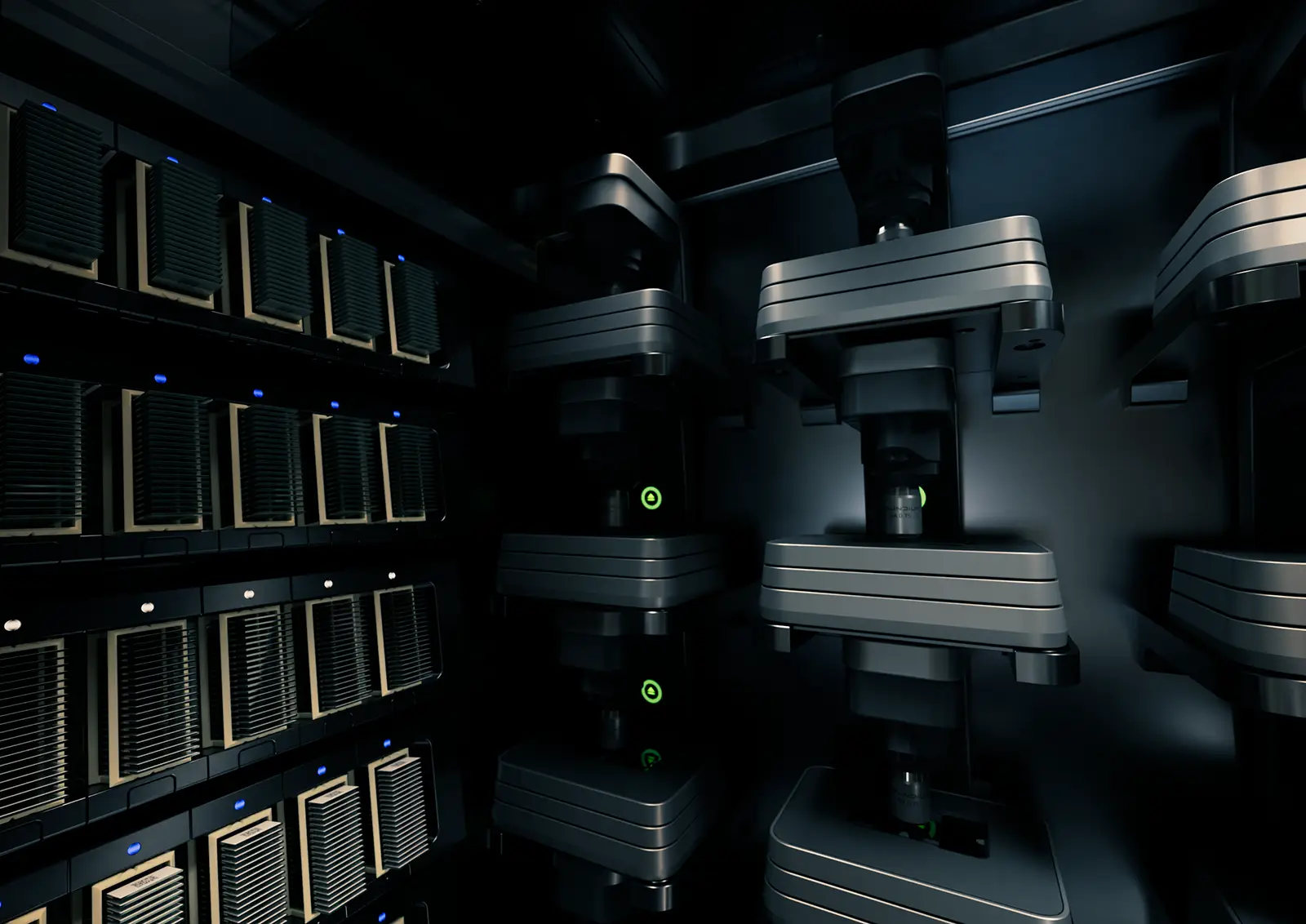
The development of Ocus R began with a question: how can laboratories obtain excellent images at the capacity they need, with as little manual intervention as possible?
The system builds on Grundium’s patented imaging approach and the experience behind a scanner platform with thousands of worldwide placements. Its design brings image quality, scanning capacity and automation together, with the aim of supporting existing laboratory workflows rather than requiring laboratories to reorganize around the scanner.
Ocus R accommodates up to 600 slides across six automated drawers. Users load racks of coverslipped slides and close the drawers, allowing the system to manage scanning and route images to the laboratory’s preferred image management system.
Continuous loading allows completed drawers to be reloaded while scanning continues. Together, these capabilities reduce routine touch points and allow laboratory staff to return to other work.
The introduction of Ocus R opens a new chapter for Grundium, extending its portfolio from single-slide and multi-slide scanners into high-throughput digital pathology.
For product information, the reveal video and updates, visit www.grundium.com/ocus-r.


