

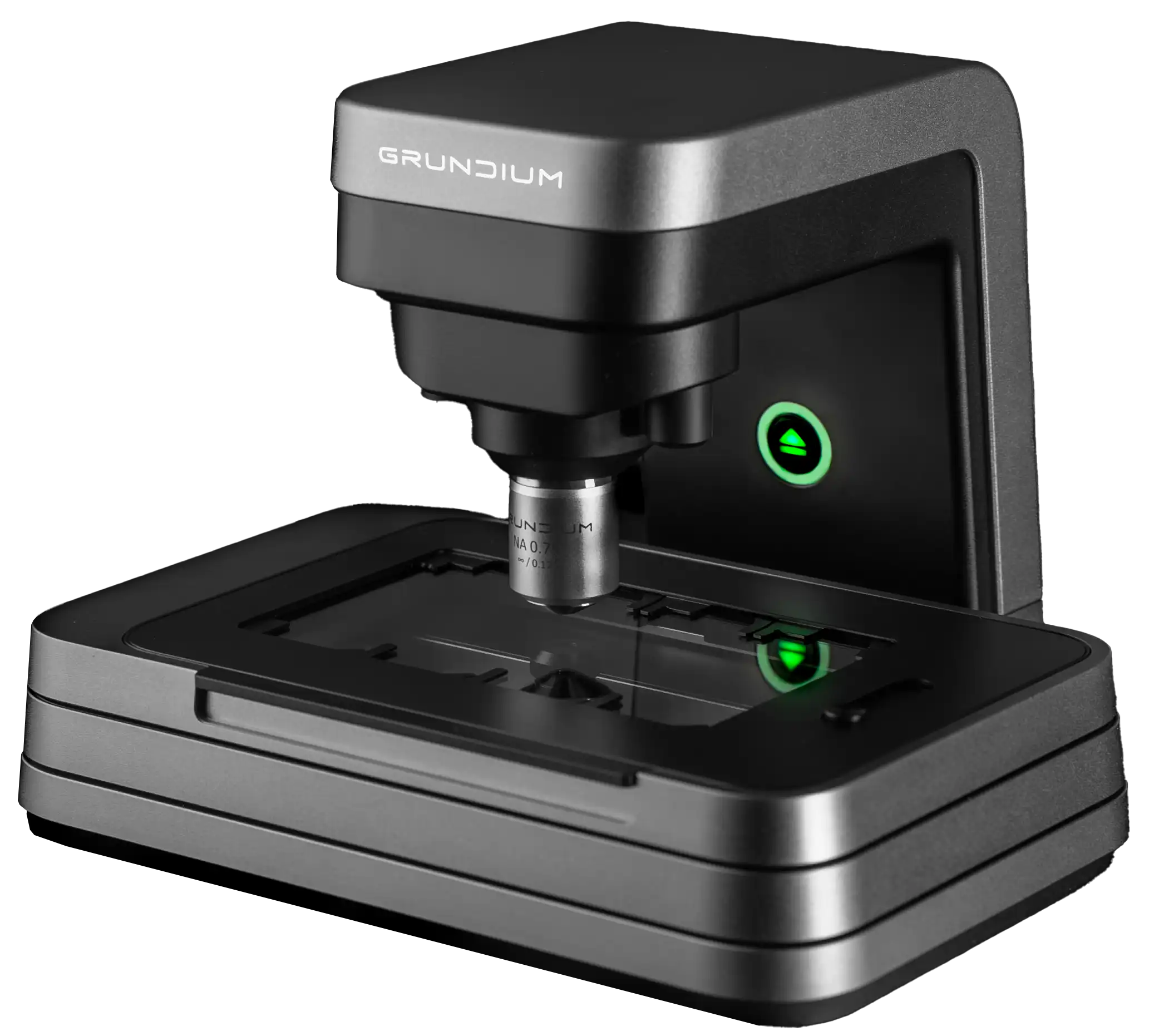
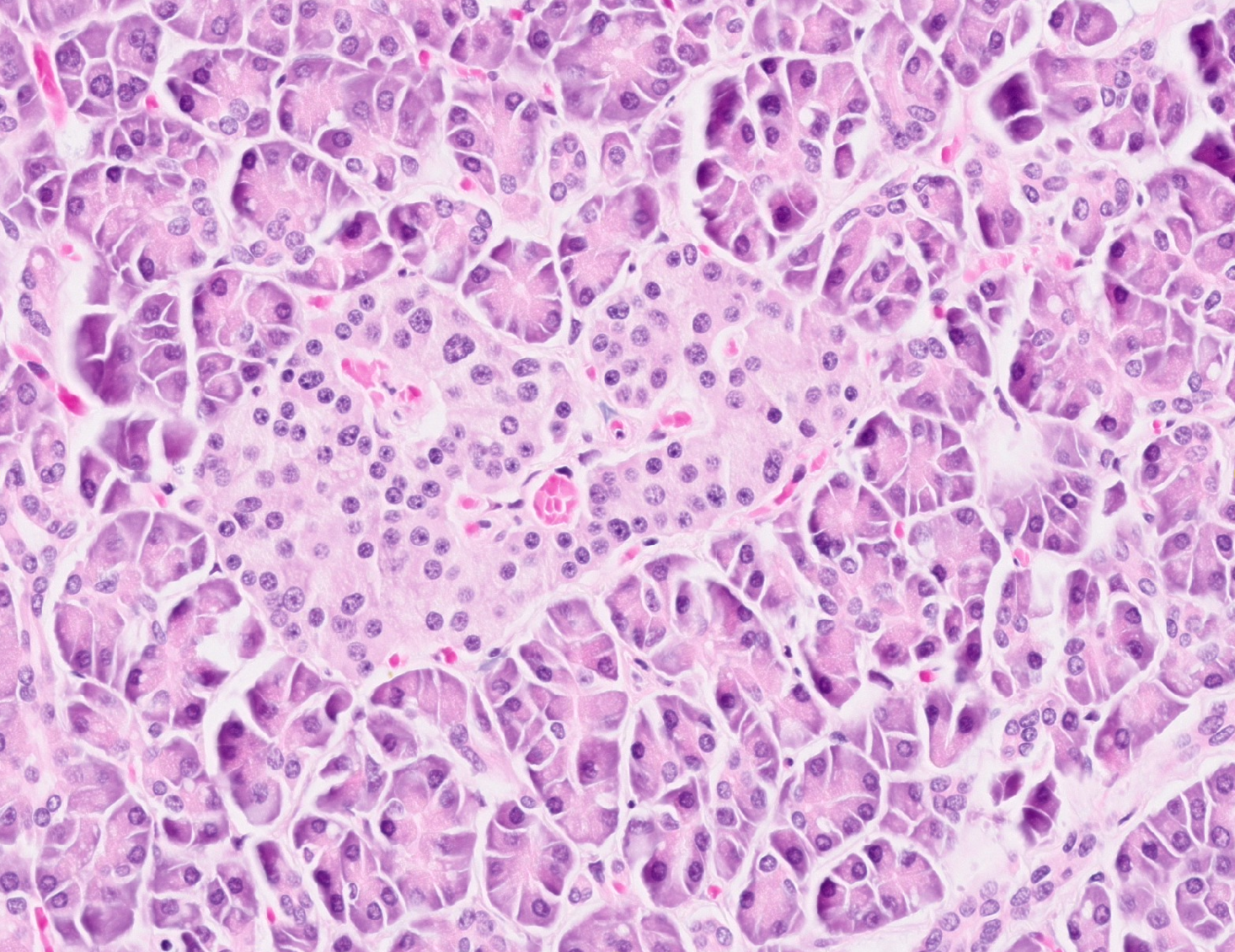
The Ocus® M series delivers enhanced image quality with its optimized illumination system and superior color reproduction, ensuring a level of consistency that you can reliably trust. The improved depth of field allows you to see better cellular detail in each field of view, providing clearer and more precise images for your analysis.
Its advanced image generation pipeline not only ensures faster processing but also delivers higher-quality image data, resulting in superior pixel clarity and detail that meet all your microscopy needs.
The upgraded stitching algorithm enables earlier access to images, allowing you to view the scanned areas while the rest is still being scanned, rather than having to wait until the entire scan is complete. This means less wait times and provides efficiency in your workflow.


The Ocus M introduces a redesigned, browser-based user interface that retains the familiarity you love while enhancing functionality from the ground up. With the ability to see slides organized by case, you can streamline your workflow and manage your samples more efficiently.
Role-based access control and permissions add an extra layer of security, ensuring that only authorized users can access and modify critical data. This feature helps maintain the integrity of your work and safeguards sensitive information.
The Ocus® M user interface features customizable and saveable scan profiles, allowing you to tailor scan settings and color preferences to your specific needs. This enhancement not only improves your workflow but also ensures consistent results across different scans.
These features give you more control over your workflow and the ability to optimize processes, making the Ocus® M a powerful tool for any lab looking to improve efficiency and accuracy in slide scanning and analysis.




Imaging mode: Brightfield
Overview camera resolution: 7 µm / pixel
Focusing: Continuous, automatic
Image sensor: 12 Mpix
Z-Stacking: Up to 7 layers
Scan time (15x15mm): ~3 minutes on Ocus M 40, ~1 minute on Ocus M 20
Barcode support: QR Code, Data Matrix
Live view: Yes
Slide capacity: Four
Slide format(s): 1" × 3" (2" × 3" available Q4 2025)
Slide requirements: Coverslip, 7 µm
Removable slide tray: Yes
Secure remote access: Yes
Image export formats: SVS, TIFF, DICOM
Internal storage: 2 Terabytes
Network connectivity: Ethernet
Export locations: Network drive, Direct download
Dimensions: 8×10.3×9.2 in / 20×26×24 cm
Weight: 12.9 lbs / 5.9 kg

The Ocus® M series is designed for digital pathology environments that require low-to-mid throughput, advanced imaging capabilities, and efficient handling of multiple slides. It supports laboratories working in diagnostics, research, and centralized scanning workflows where productivity, image quality, and reliability are essential.
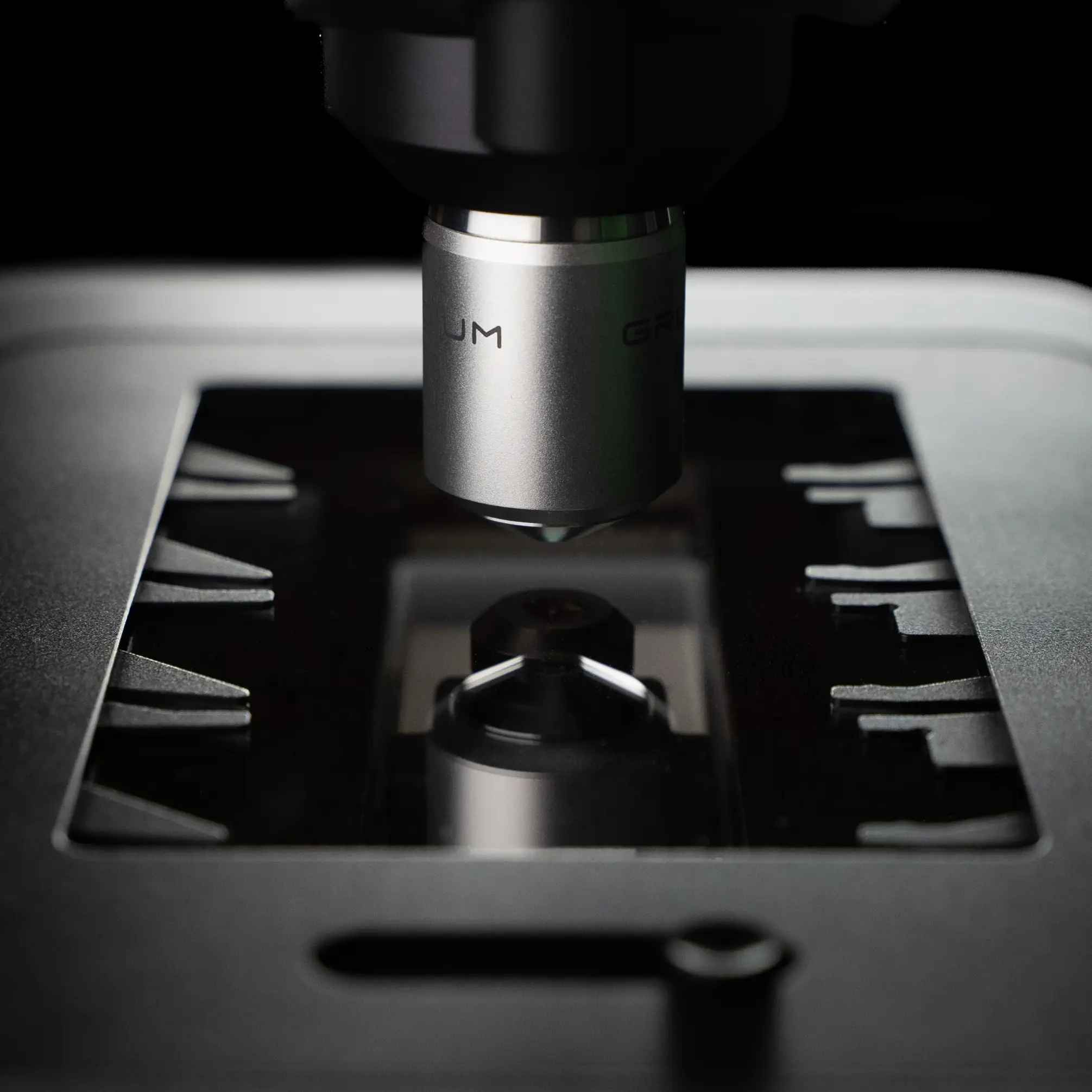
The Ocus® M series supports four standard 1 × 3 inch glass slides in a single removable slide tray, enabling walk-away scanning and reduced manual handling. It also supports a tray for two larger 2 × 3 inch glass slides, which is useful for large-format or whole-mount workflows — for example whole-mount prostate sections, large breast resections for margin assessment, and other cases where preserving a larger continuous tissue context on a single slide is preferred.
A multi-slide pathology scanner improves digital pathology workflows by allowing multiple slides to be scanned in one run, reducing repeated manual handling and keeping scanning more predictable. With the Ocus® M Series, removable slide trays support walk-away scanning and let staff load, unload, and prepare slides in parallel. This helps laboratories increase throughput while maintaining consistent image quality across cases.
The Ocus® M series is especially useful in workflows where a single case routinely includes multiple slides (for example H&E plus additional levels and IHC). In those situations, batch loading several slides at once reduces the need for the operator to swap slides between each scan, which cuts repetitive handling and keeps the scanning process more continuous.
No — the Ocus® M series is designed for mid-throughput digital pathology workflows. It’s a strong fit for laboratories that want a meaningful step up from single-slide scanning, with batch capacity and walk-away operation that reduce repetitive handling — especially when cases include multiple slides. At the same time, it offers this efficiency in a compact format, without the footprint and infrastructure typically associated with large high-throughput systems.


